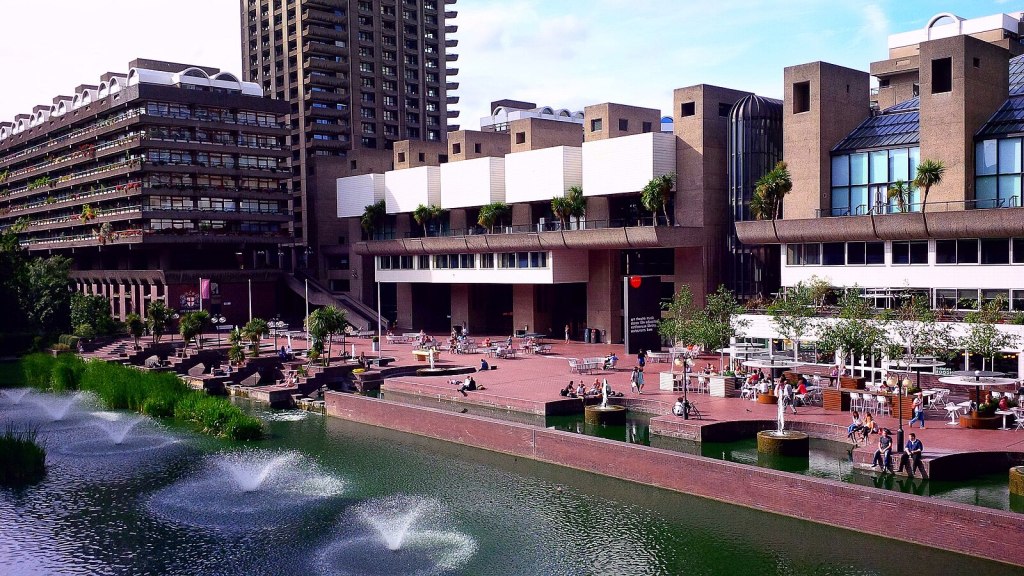
Last week, I had the opportunity to attend the Leading Design Conference at the Barbican Centre in London. I first heard about the event through our accessibility research partners at Fable, who were among the main sponsors. Because most of our collaboration happens online (Fable are based in Canada) it felt like the perfect chance to finally spend time with them in person and hear from some amazing speakers at the same time. The programme offered a rich mix of talks from design-leadership peers, all set within an iconic venue, along with plenty of opportunities to connect with colleagues from the UK and around the world who are navigating similar challenges in their roles.
The conference, organised by Clearleft, has become a well-established event since it first launched in 2016. Its schedule and format are what you’d expect from a strategic design agency: clearly refined and iterated over the years, with just the right balance of networking, talks, and social time. In a fitting parallel to the conference’s own evolution, there was a lovely moment when we learned that one of the speakers this year, Yoel Sumitro, had attended back in 2018 when he was a new design leader.
Day one of the conference, for me, centred on the challenges our industry is facing. Mass layoffs and redundancies have become commonplace since the pandemic, and there’s growing uncertainty about the impact of AI on our work. It was hard to feel optimistic by the end of the afternoon, but Dalit Shalom from The New York Times, offered a different perspective. In a talk that I expected to be about how the Times uses AI, she instead shared examples of work that intentionally avoids it as a way to strengthen trust and credibility. It was a nice reminder that so much of our influence as design leaders is built on trust, so why would we hand that over to shortcuts and AI?
The day closed with a call for more play. We were encouraged to experiment for the sake of experimentation and to momentarily step outside the relentless pressure to be more efficient and more optimised. When the closing panel was asked whether AI is a friend, foe, or catalyst, one speaker summed it up perfectly and answered yes.
Day two opened with two standout talks. Laura Yarrow, Head of Design at GDS, encouraged us to resist the pressure to conform to traditional expectations of professionalism and leadership, and instead embrace the unconventional qualities we each bring into our organisations… essentially, to be more pirate. Yoel Sumitro followed with a humorous but pointed critique of our industry’s obsession with frameworks and processes, reminding us that, in many situations, outcomes matter far more than the methods we fetishise.
Daniel Burka from Hard Problems closed the day with a compelling provocation, challenging us to consider how many talented designers are currently working in big tech optimising for ad clicks—and urging us to devote more of our time, whether inside or outside of work, to tackling the meaningful, urgent problems facing the world.
During the two days, I impulsively ordered four books that were recommended by speakers in their slides. I’ll list them here, and in the spirit of digital gardening, I’ll come back to update this post once I’ve read them.
- Be More Pirate by Sam Conniff
Recommended by Laura Yarrow, GDS - What Art Does by Brian Eno
Recommended by Dalit Shalom, The New York Times - Moral Ambition by Rutger Bregman
Recommended by Daniel Burka, Hard Problems - Health Design Thinking by Bon Ku and Ellen Lupton
Recommended by Daniel Burka, Hard Problems
There were far too many takeaways to capture in one post, and a few that feel more valuable to keep to myself for now. Once I’ve had the chance to put some of these learnings into practice, I will return to these reflections and see what’s changed. I’ve uploaded some photos of the slides that resonated to are.na.
 Brian Grellmann